


What types of hula hoop are there?
There are beginner hoops, fitness hoops, dance hoops, children’s hoops, polypro hoops, smart hoops and LED hoops. They differ in diameter, weight, material, padding and intended use.
Today, hula hoops are designed for very different uses: from easy-to-control beginner hoops and padded fitness hoops to lightweight dance hoops for tricks. No single feature determines whether a hoop is a good fit; diameter, weight, material, padding and the way it feels in motion all work together.
Many people remember hula hoops from childhood. Brightly coloured plastic hoops became internationally popular in the 1950s. Today they are used for recreational hooping, fitness sessions, hoopdance and rhythmic gymnastics.
When hooping, rhythm, coordination and controlled movement matter more than strength. A larger hoop usually turns more slowly and gives beginners more time to respond. Lighter, smaller hoops react faster and are therefore often chosen for dance and tricks.
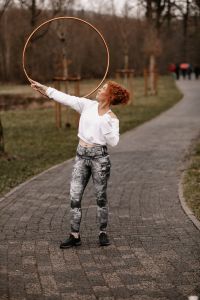
A larger diameter usually creates a calmer pace. This helps many beginners find the basic movement more easily.
Fitness hoops are often padded and somewhat heavier. Their weight and surface should suit your experience and sensitivity to pressure.
Dance hoops and polypro hoops are more agile. They suit direction changes, off-body tricks and flowing combinations.
Children’s hoops should be light, easy to hold and suited to the child’s height. Sufficient room to move remains essential.
Handling: Affects pace and the space required.
Guide: Larger hoops usually move more slowly; smaller hoops respond faster.
Handling: Changes momentum and pressure.
Guide: Choose no more weight than you need.
Handling: Determines stiffness and responsiveness.
Guide: Dance hoops are often lighter and more flexible.
Handling: Changes grip and skin contact.
Guide: Look for comfortable contact and clean workmanship.
Handling: Makes transport and storage easier.
Guide: Make sure every section is fully locked before use.
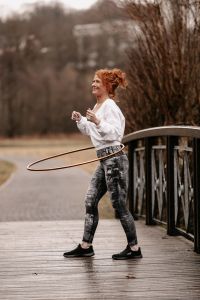
For your first attempts, choose a level stance and leave enough distance from furniture, walls and other people. Hold the hoop level against your back and start it with a controlled push. Small front-to-back or side-to-side movements usually keep it moving more effectively than large circular hip movements.
Short sessions, practice in both directions and regular breaks make a sensible routine. Stop if you experience pain, numbness, marked skin irritation or severe bruising, and check whether the hoop is suitable for you.
Hoops with ridges or massage elements can feel more intense. Find more information about hula hoops with massage elements. They are not a medical treatment and do not guarantee specific physical results.
With experience, steps, direction changes and off-body movements can be combined into short sequences. Multiple-hooping is also possible, but it requires secure basic technique, coordination and suitable hoops. The Hoopomania Model Catwalk offers inspiration for combining hooping with choreographed walking.
There are beginner hoops, fitness hoops, dance hoops, children’s hoops, polypro hoops, smart hoops and LED hoops. They differ in diameter, weight, material, padding and intended use.
Important differences include diameter, weight, tubing material, surface, connection system, padding and feel in motion. A larger hoop usually turns more slowly, while a light dance hoop is better suited to tricks and quick changes.
Many beginners find the basic movement easier with a larger, easy-to-control hoop. Height, experience, available space, sensitivity to pressure and the preferred feel in motion also matter.
Larger or padded hoops are often used for basic technique and fitness. Lighter, more agile hoops are commonly chosen for hoopdance and tricks. Children’s hoops should be age-appropriate, light and easy to control.
Yes. Multiple-hooping is used particularly in hoopdance and performances. It requires coordination, experience and suitable hoops. Beginners should first establish secure basic technique with one hoop.
Not automatically. The hoop needs to suit its intended use. Workmanship, material, connection system, grip, padding and durability can affect the price, but the best choice depends on how you plan to use it.