


Hula Hoop and digestion: pressure, bloating and comfort
Comfort & safety
Hula hooping adds movement to everyday life, but it is not a treatment for digestive problems. Contact with the hoop may feel pleasant, unfamiliar or clearly too intense around the abdomen. What matters is how your body responds to the particular combination of hoop, technique and training duration.
Can hula hooping cause bloating or abdominal pressure?
A link in time is possible: during hooping, the hoop repeatedly contacts the torso, while massage hoops concentrate that contact on individual knobs or profiles. This can feel uncomfortable, especially at high intensity, during long sessions or if you are particularly sensitive to pressure.
That does not show that the hoop itself causes a bloated abdomen. Bloating has many possible causes, including diet, swallowed air, constipation and other digestive problems. Look not only at your training, but also at timing, meals and any other symptoms.
Classic hoop or massage hoop: what is the difference?
A classic hula hoop without pronounced knobs usually distributes contact more broadly. With a massage hoop, the shape, material and arrangement of the knobs affect how the pressure feels. More knobs, greater weight or stronger pressure do not automatically mean a better workout.
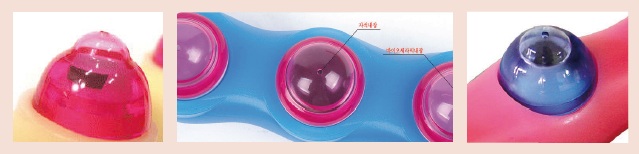
Existing image: knobs change the contact area and therefore the subjective sensation of pressure. This does not imply a medical effect.
How intense a hoop feels also depends on its diameter, weight and padding, as well as your technique, clothing, session length and personal sensitivity. Hoop choice should therefore never be based on weight alone.
How to respond to common training signals
| What you notice | A sensible response |
|---|---|
| Unfamiliar but mild pressure | Shorten the session, reduce the intensity and see whether a smoother or better-padded hoop feels more comfortable. |
| Pronounced pressure marks or bruising | Pause until the area has recovered. Do not train through it; reassess whether the hoop is suitable. |
| Recurring abdominal, back or flank pain | Stop training and seek medical assessment instead of interpreting the pain as an effect of the workout. |
| Sudden severe pain or other acute symptoms | Do not continue training and seek prompt medical help. Severe acute symptoms are not a normal training response. |
What does hula hooping mean for digestion?
Regular physical activity can support an active lifestyle in general. It does not follow that hula hooping treats a digestive disorder or that massage knobs specifically “train” the bowel. The verified research on hula hooping provides no evidence that it treats constipation or has a specific effect on bloating.
If you feel uncomfortable immediately after a large meal, schedule your session for another time. This is a practical decision about comfort, not a universal medical rule. Recurring bloating should be considered independently of exercise and assessed if necessary.
How to start more comfortably
- Choose a short session: Start with a duration that lets you control the movement and assess how you feel afterwards.
- Monitor pressure, not minutes: One fixed duration cannot suit every person and every hoop.
- Distinguish between hoop types: A massage hoop may feel much more intense than a smooth, padded or lighter hoop.
- Allow recovery time: Increase the workload only if skin contact, movement and exertion continue to feel comfortable.
- Do not reinterpret pain: Severe or persistent pain is not a sign of effective training.
Frequently asked questions about comfort and tolerance
Can hula hooping improve digestion?
Physical activity can be part of a lifestyle that supports digestion in general. However, there is no evidence that hula hooping or massage knobs specifically treat constipation or bloating.
Why does my abdomen feel bloated after training?
Repeated contact with the hoop may make an unfamiliar pressure sensation more noticeable. Actual bloating can have many other causes. If it recurs or is accompanied by other symptoms, seek medical advice about the cause.
Are bruises normal when hula hooping?
They can occur, especially with intense massage hoops, but they are not a desirable training outcome. Pause until the skin has recovered, then reduce the intensity or choose a gentler hoop.
How long should I train as a beginner?
There is no fixed number of minutes that suits everyone. Start with a short session and increase it only if you can control the hoop and your skin, abdomen and back tolerate the load well.
Which hoop is suitable if I am very sensitive to pressure?
A controllable, smooth or padded hoop often feels more comfortable than a model with pronounced knobs. The final choice also depends on your height, experience, training goal and previous hoop.
When should I seek medical advice about symptoms?
Medical advice is appropriate for recurring bloating, unintentional weight loss, blood in the stool or persistent symptoms. Sudden severe abdominal pain or other acute symptoms require urgent assessment.
A suitable starting point instead of a blanket weight recommendation
Hoopomania recommends hula hoops for people, not simply by weight. Your training goal, height, experience, sensitivity to pressure and previous experience with hoops are considered together.
Sources and context
- NHS: Bloating - causes, self-monitoring and warning signs; last reviewed 21 January 2026.
- Park et al. 2007 - a rare case report after excessive hooping; not evidence of a typical risk.
- Yang & Chang 2003 - a rare case report, included only as a limited safety signal.